
Best for
History and architecture enthusiasts alike
Time needed
2–3 hours
Worth it?
Yes — one of Europe's most significant Jewish heritage sites and a landmark of contemporary architecture
Skip if
You're not open to an emotionally and architecturally intense visit
About Jewish Museum Berlin
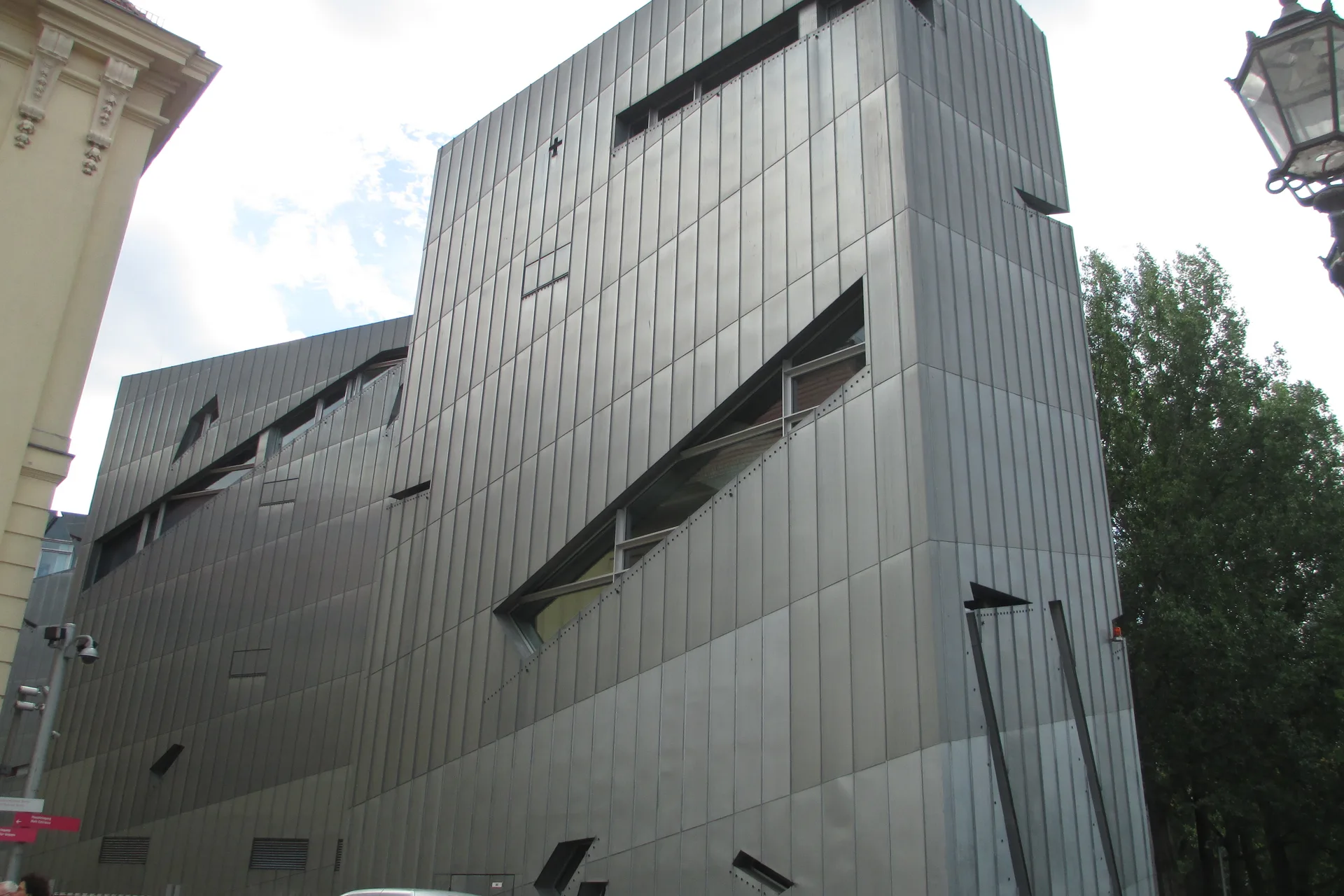
Opened in 2001, the Jewish Museum Berlin combines the Baroque Kollegienhaus with an entirely new building by architect Daniel Libeskind, whose design is one of the most discussed pieces of museum architecture built anywhere in the past 30 years. The building's zinc-clad exterior, cut through with jagged, seemingly random window slits, has no conventional front entrance — visitors reach it via an underground passage from the old building, immediately disorienting the usual museum-going experience.
Libeskind built specific architectural experiences into the structure itself. The Axis of Exile leads outside to the Garden of Exile, a grid of 49 tilted concrete columns planted with willow oak that deliberately induces mild disorientation as you walk through it. The Holocaust Tower is an empty, unheated concrete void lit only by a single slit of natural light — visitors typically spend only a minute or two inside, and the room is designed to be unsettling rather than informative in any conventional sense.
Read the full storyShow less
The core historical exhibition, entirely free to visit, traces two millennia of Jewish life in German-speaking lands — far broader than a Holocaust museum alone, covering medieval Jewish communities, the Enlightenment-era struggle for civic rights, the flourishing of Jewish culture in Weimar-era Berlin, and the persecution and destruction of the Nazi period, before ending with postwar Jewish life in Germany.
Temporary exhibitions in the older Kollegienhaus building carry a separate ticket. Given the building's architectural intensity, this isn't a museum to rush — allow at least two hours, more if the Libeskind spaces affect you the way they're designed to.
What to See: Highlights
- 1Daniel Libeskind's zigzag building, one of the most significant works of contemporary museum architecture
- 2The Garden of Exile's disorienting grid of 49 tilted concrete columns
- 3The Holocaust Tower — an empty concrete void lit by a single slit of light
- 4A free core exhibition covering two millennia of German-Jewish history
- 5The historic Baroque Kollegienhaus building alongside the new Libeskind wing
Skip the Queue — Book Tickets Online
Same admission, instant confirmation. Compare prices across platforms.
Affiliate disclosure — we may earn a commission at no extra cost to you.
Insider Tips
The core historical exhibition is free — only temporary exhibitions require a ticket
The Garden of Exile and Holocaust Tower are architectural experiences, not just galleries — take your time
Security screening at entry is thorough, similar to an airport — allow extra time
Closed on several specific dates in 2026, including Jewish holidays — check before visiting
Allow at least two hours; rushing defeats the purpose of Libeskind's design
Book a Guided Tour
Get the most from your visit with a local expert guide.
Affiliate disclosure — we may earn a commission at no extra cost to you.
Getting There
Lindenstraße 9-14, 10969 Berlin
Open in Google Maps →- 1U-Bahn Hallesches Tor (U1, U6) or Kochstraße (U6), then a 10-minute walk.
Where to stay
Hotels in Berlin
Compare prices across hundreds of hotels near this attraction — from budget hostels to luxury stays. Free cancellation on most rooms.
Affiliate disclosure — we may earn a commission at no extra cost to you. Powered by Booking.com.
Frequently Asked Questions
Everything you need to know before you visit.
Is Jewish Museum Berlin worth visiting?+−
How long does a visit to Jewish Museum Berlin take?+−
Who is Jewish Museum Berlin best for?+−
Do I need to book anything in advance to visit Jewish Museum Berlin?+−
Is Jewish Museum Berlin included with the Berlin city pass?+−
Should You Visit?
Visit if...
- You want to understand German-Jewish history beyond just the Holocaust
- You're interested in Daniel Libeskind's architecture
- You appreciate museums that use physical space to convey meaning
- You have at least two unhurried hours
Skip if...
- You're not prepared for an emotionally intense, disorienting architectural experience
- You have less than an hour — the building deserves proper time
- Your visit falls on one of the 2026 closure dates
Ready to Book Your Visit?
More to See in Berlin
Topography of Terror
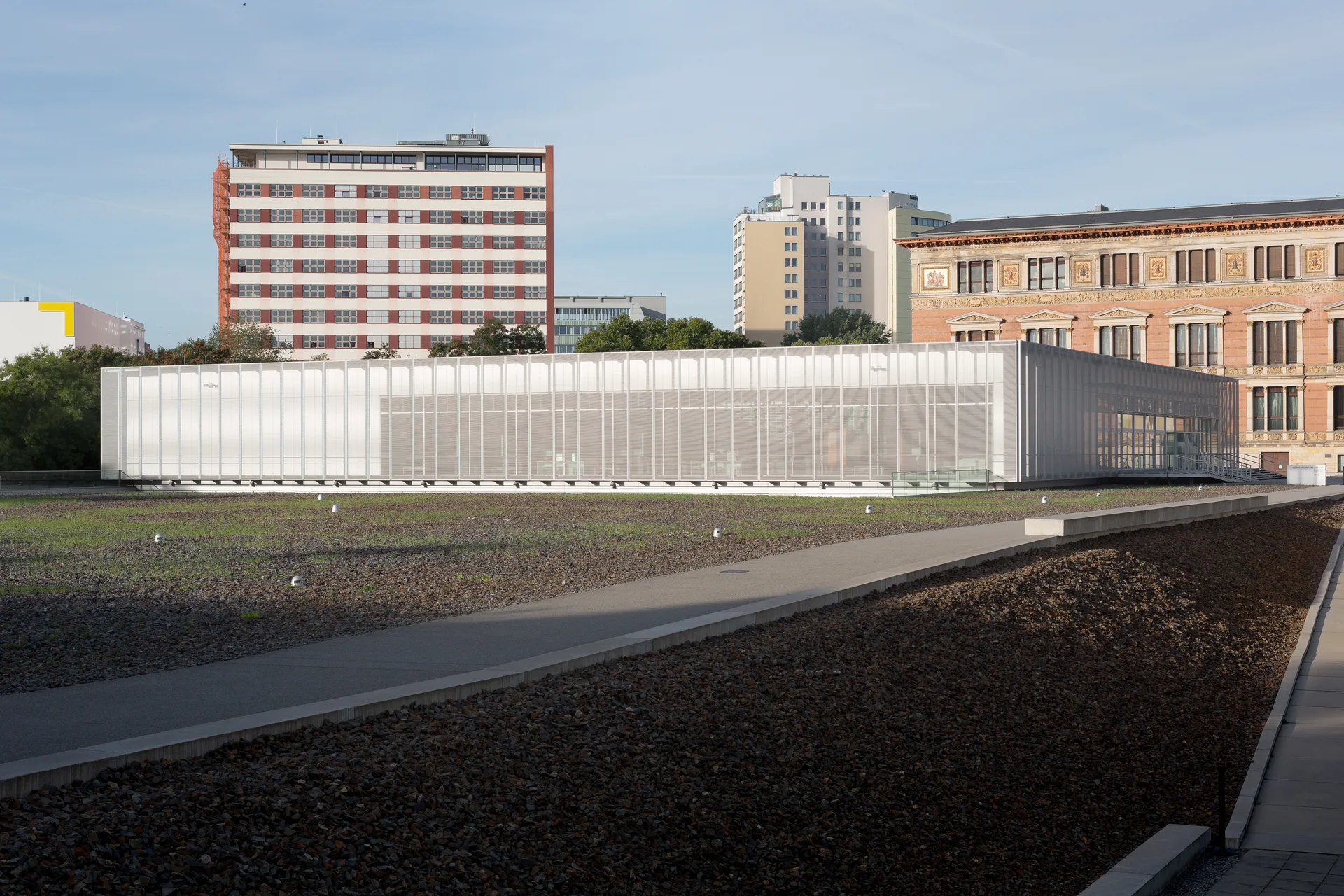
A free outdoor and indoor documentation centre on the exact site of the former SS and Gestapo headquarters — one of the most direct, unflinching confrontations with Nazi history anywhere in Berlin.
Holocaust Memorial (Memorial to the Murdered Jews of Europe)
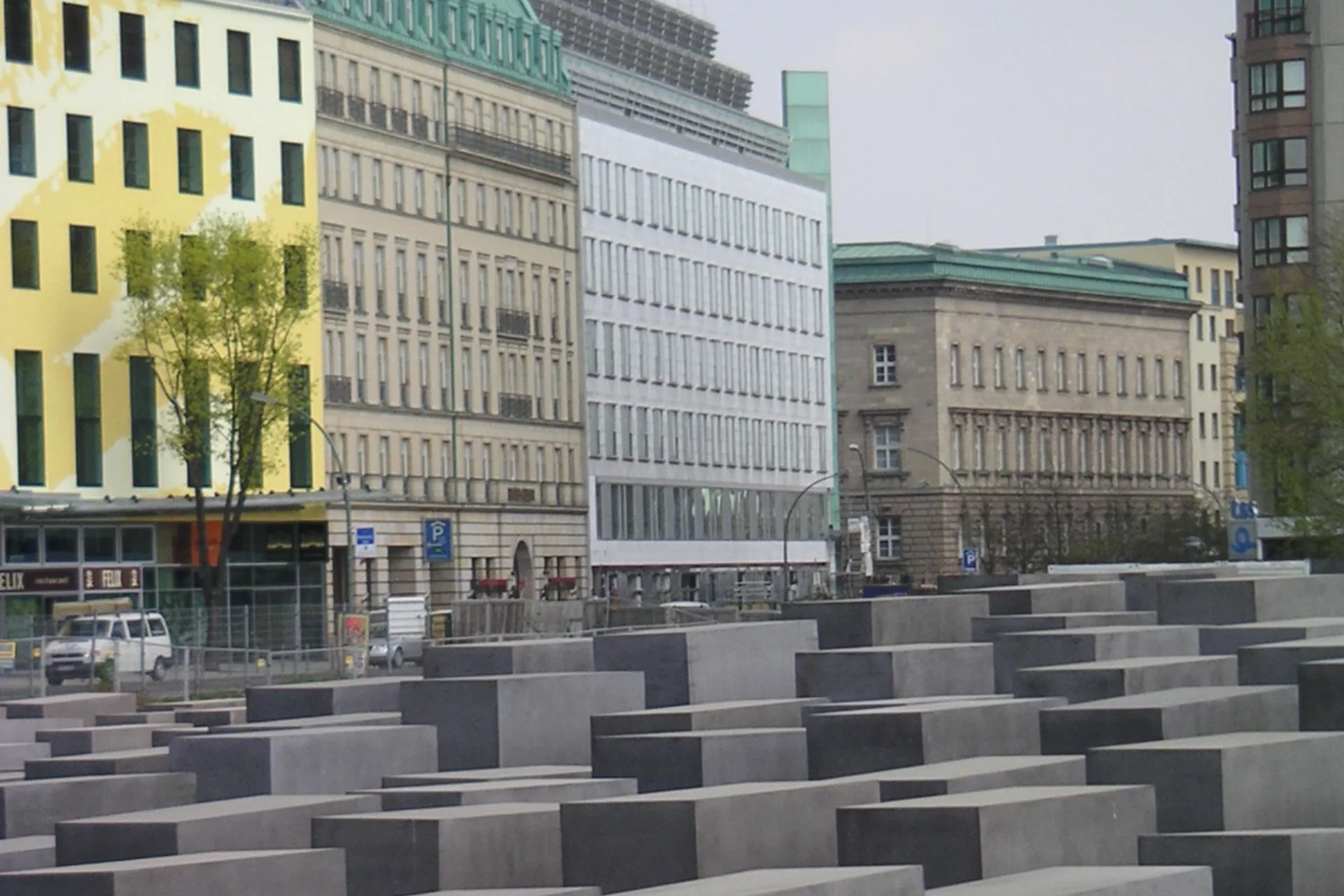
2,711 concrete stelae covering a full city block near Brandenburg Gate — Peter Eisenman's deliberately disorienting memorial, with a free underground information centre documenting individual victims.
Anne Frank Zentrum
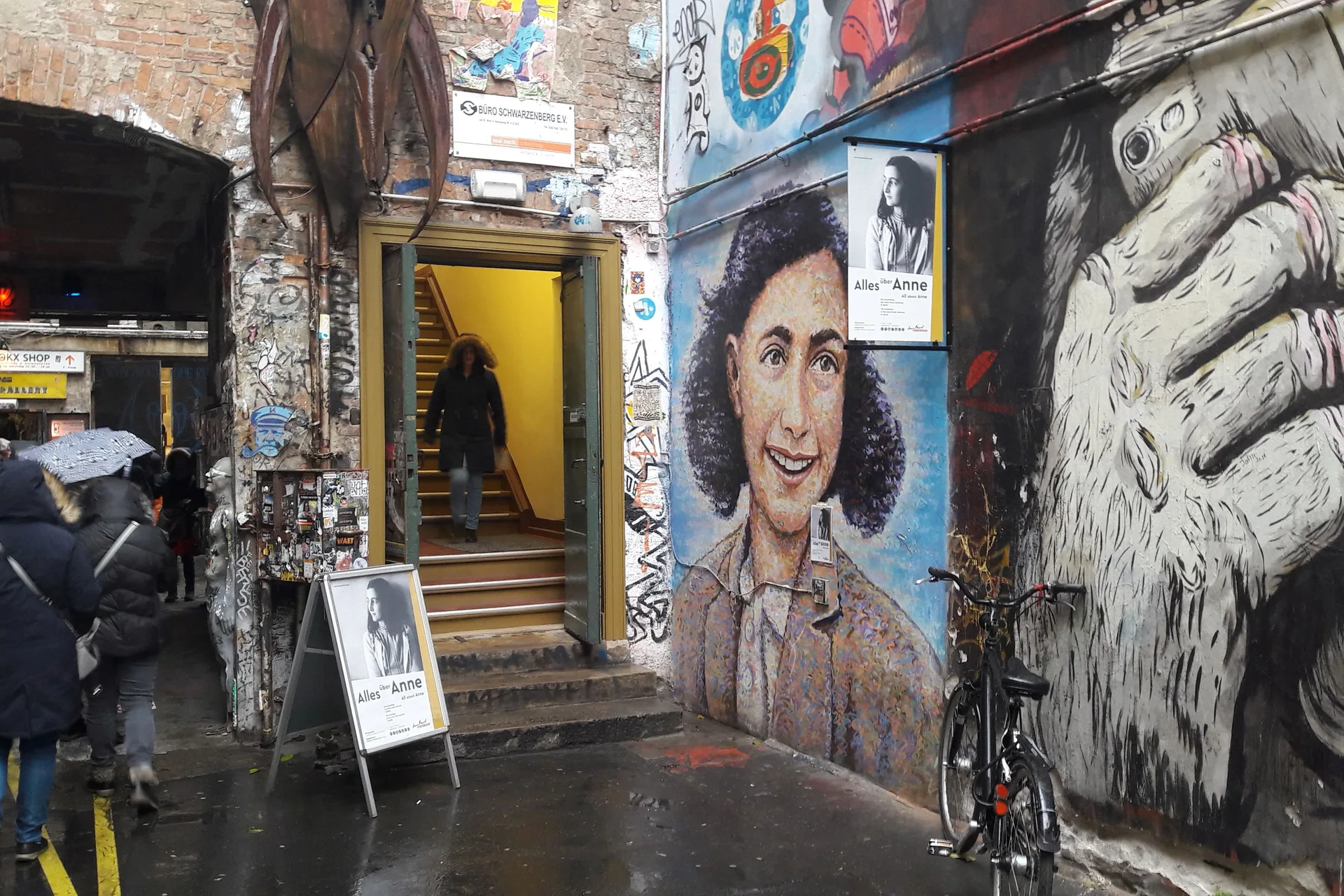
A compact, focused exhibition on Anne Frank's life and diary, set inside the Hackesche Höfe courtyards — connects her story to Berlin specifically, where the Frank family lived before fleeing in 1933.