
Best for
Anyone connecting Gellért Hill to the Great Market Hall, architecture fans
Time needed
10-20 minutes to cross
Worth it?
Yes — short, free, and a genuine piece of Budapest civic history
Skip if
You've already crossed via Elisabeth or Chain Bridge and don't need another
About Liberty Bridge
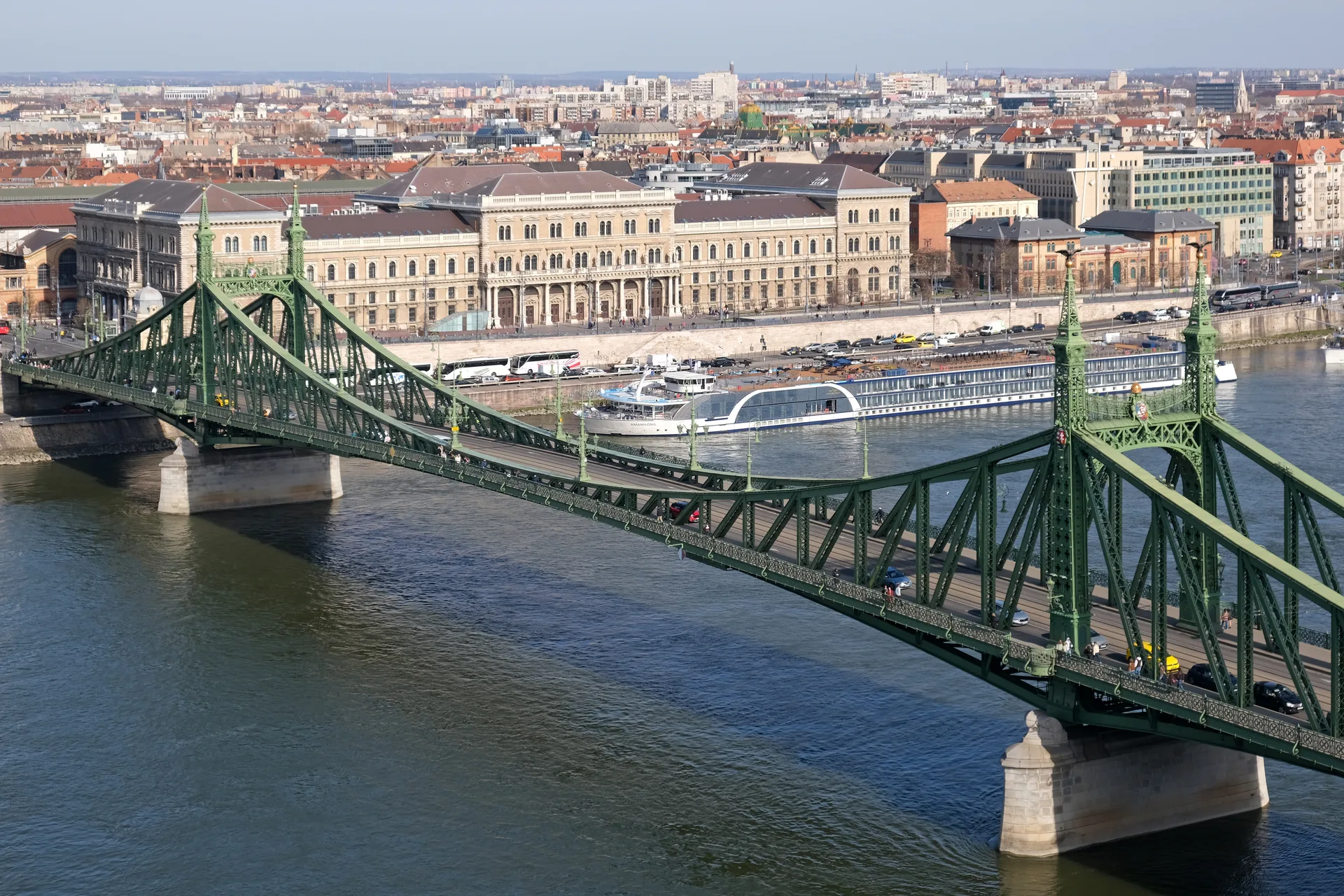
Liberty Bridge (Szabadság híd) opened in 1896 as part of the millennium celebrations, originally named Franz Joseph Bridge after the reigning Habsburg emperor, and was renamed after WWII to reflect Hungary's changed political circumstances. At 331.2 metres, it's the shortest of Budapest's Danube road bridges, connecting the base of Gellért Hill on the Buda side with the Great Market Hall area on the Pest side.
Structurally, it's a cantilever bridge — a design distinct from the suspension engineering of Chain Bridge or the cable-stayed Elisabeth Bridge — and it holds a genuine claim to historical significance as the first permanent Budapest bridge built entirely from Hungarian-manufactured materials, a point of national industrial pride at the time. Its green ironwork is heavily ornamented, widely considered among the most decorative metal truss bridges anywhere, topped with bronze turul birds — a mythical falcon-like creature from Hungarian folklore, associated with the legendary founding of the Hungarian nation.
Read the full storyShow less
Like its neighbours, it was destroyed by retreating German forces in January 1945 — but uniquely among Budapest's bridges, it was the first to be rebuilt after the war, reopening within a few years using largely its original design and materials where salvageable, unlike Elisabeth Bridge's total modernist reimagining.
In recent years, the bridge has taken on an unusual second life: on summer evenings and weekends, sections are periodically closed to traffic and taken over informally (and sometimes officially, during scheduled car-free events) by pedestrians and cyclists, with locals gathering to sit, picnic and even sunbathe directly on the roadway — a genuinely distinctive piece of contemporary Budapest street life worth timing a visit around if your dates allow.
What to See: Highlights
- 1Budapest's shortest Danube bridge, opened 1896
- 2First permanent Budapest bridge built entirely from Hungarian materials
- 3Ornate green cantilever ironwork topped with mythical turul-bird sculptures
- 4The first Budapest bridge rebuilt after WWII destruction
- 5Connects Gellért Hill to the Great Market Hall area
- 6Informal summer pedestrian gatherings on the bridge deck
Skip the Queue — Book Tickets Online
Same admission, instant confirmation. Compare prices across platforms.
Affiliate disclosure — we may earn a commission at no extra cost to you.
Insider Tips
Check for scheduled car-free/pedestrian events in summer if you want to see the bridge at its liveliest
It's a natural connecting walk between Gellért Hill and the Great Market Hall
Look up for the bronze turul-bird sculptures at the bridge towers
Evening light on the green ironwork photographs particularly well
Combine with Rudas Baths or the Cave Church on the Buda side
Book a Guided Tour
Get the most from your visit with a local expert guide.
Affiliate disclosure — we may earn a commission at no extra cost to you.
Getting There
Szabadság híd, spanning the Danube between Szent Gellért tér (Buda) and Fővám tér (Pest)
Open in Google Maps →- 1Tram 19, 41 or 47/48/49, or Metro M4 to Szent Gellért tér or Fővám tér at either end.
Where to stay
Hotels in Budapest
Compare prices across hundreds of hotels near this attraction — from budget hostels to luxury stays. Free cancellation on most rooms.
Affiliate disclosure — we may earn a commission at no extra cost to you. Powered by Booking.com.
Frequently Asked Questions
Everything you need to know before you visit.
Is Liberty Bridge worth visiting?+−
How long does a visit to Liberty Bridge take?+−
Who is Liberty Bridge best for?+−
Do I need to book anything in advance to visit Liberty Bridge?+−
Is Liberty Bridge included with the Budapest city pass?+−
Should You Visit?
Visit if...
- You're walking between Gellért Hill and the Great Market Hall
- You want to see Budapest's most ornately decorated bridge ironwork
- You're visiting during a summer pedestrian/car-free event
- You appreciate turn-of-the-century industrial and civic history
Skip if...
- You've already crossed enough bridges on this trip
- You're not near this stretch of riverbank and it's out of your way
Ready to Book Your Visit?
More to See in Budapest
Central Market Hall
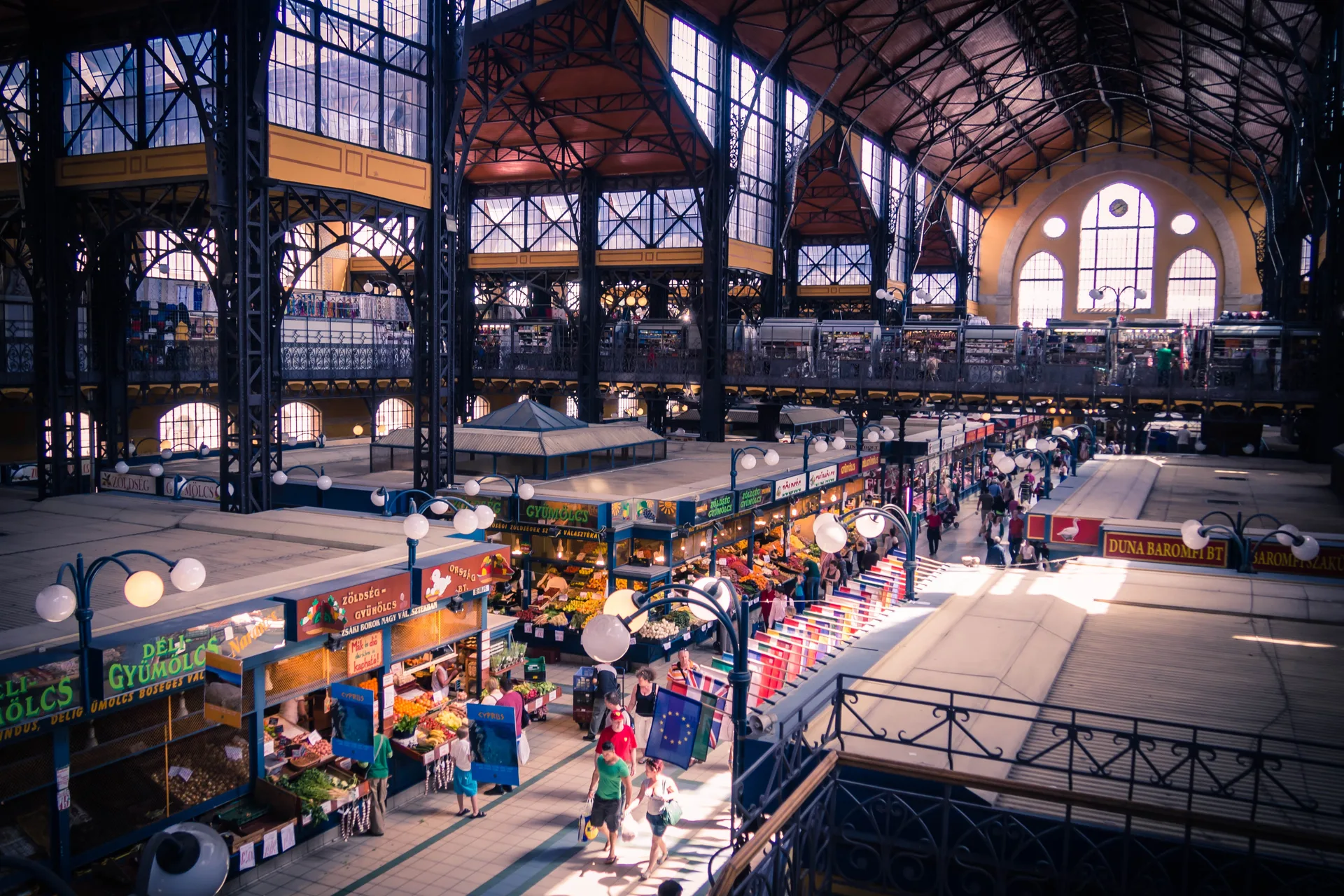
Budapest's largest and oldest indoor market — a soaring 1897 iron-and-glass hall of paprika stalls, butchers, produce and a food court, right at the foot of Liberty Bridge.
Gellért Hill & Citadella
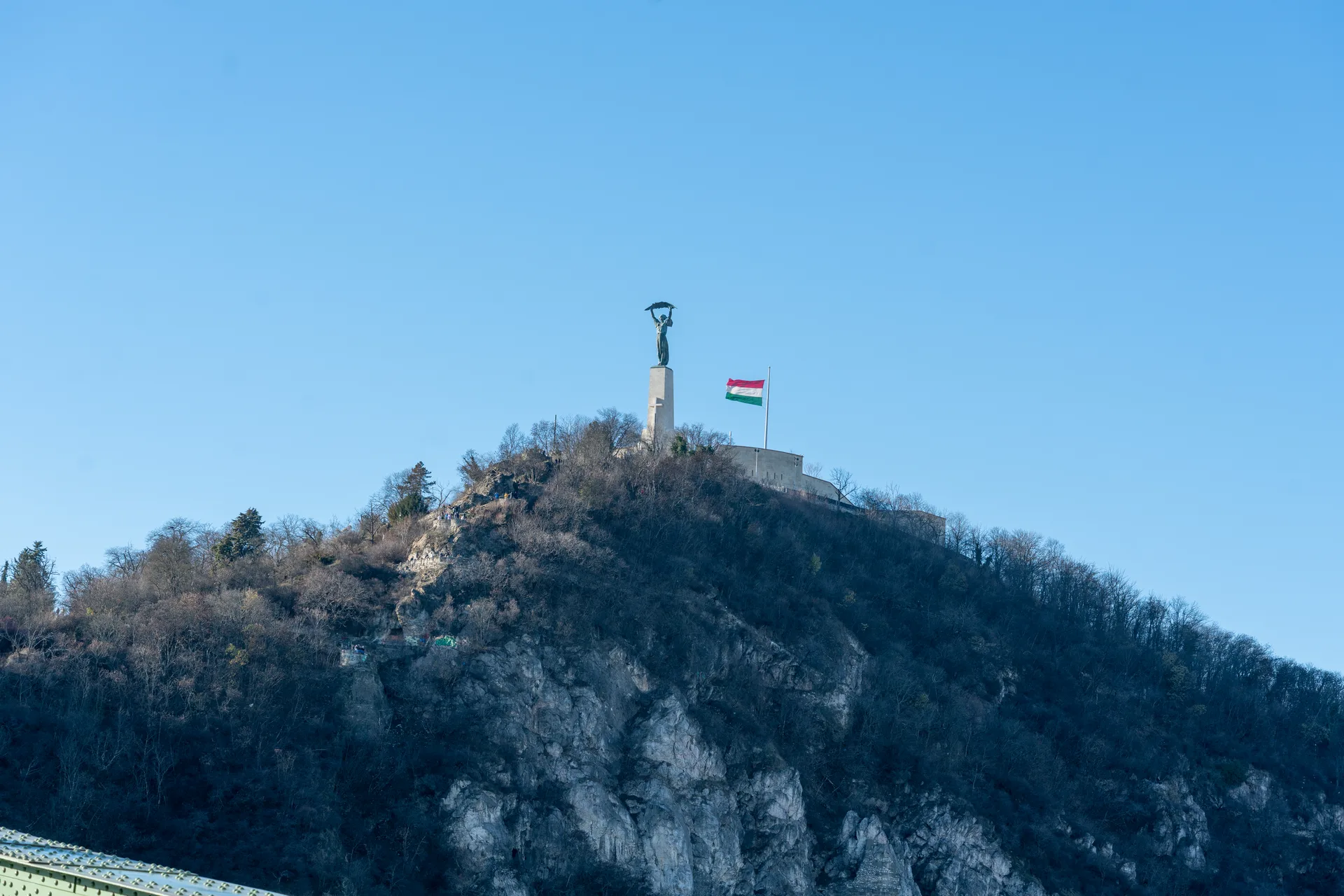
A 235-metre hill on the Buda side crowned by a Habsburg-era fortress and the Liberty Statue — free public parkland with arguably the single best panoramic view over both Buda and Pest.
Elisabeth Bridge
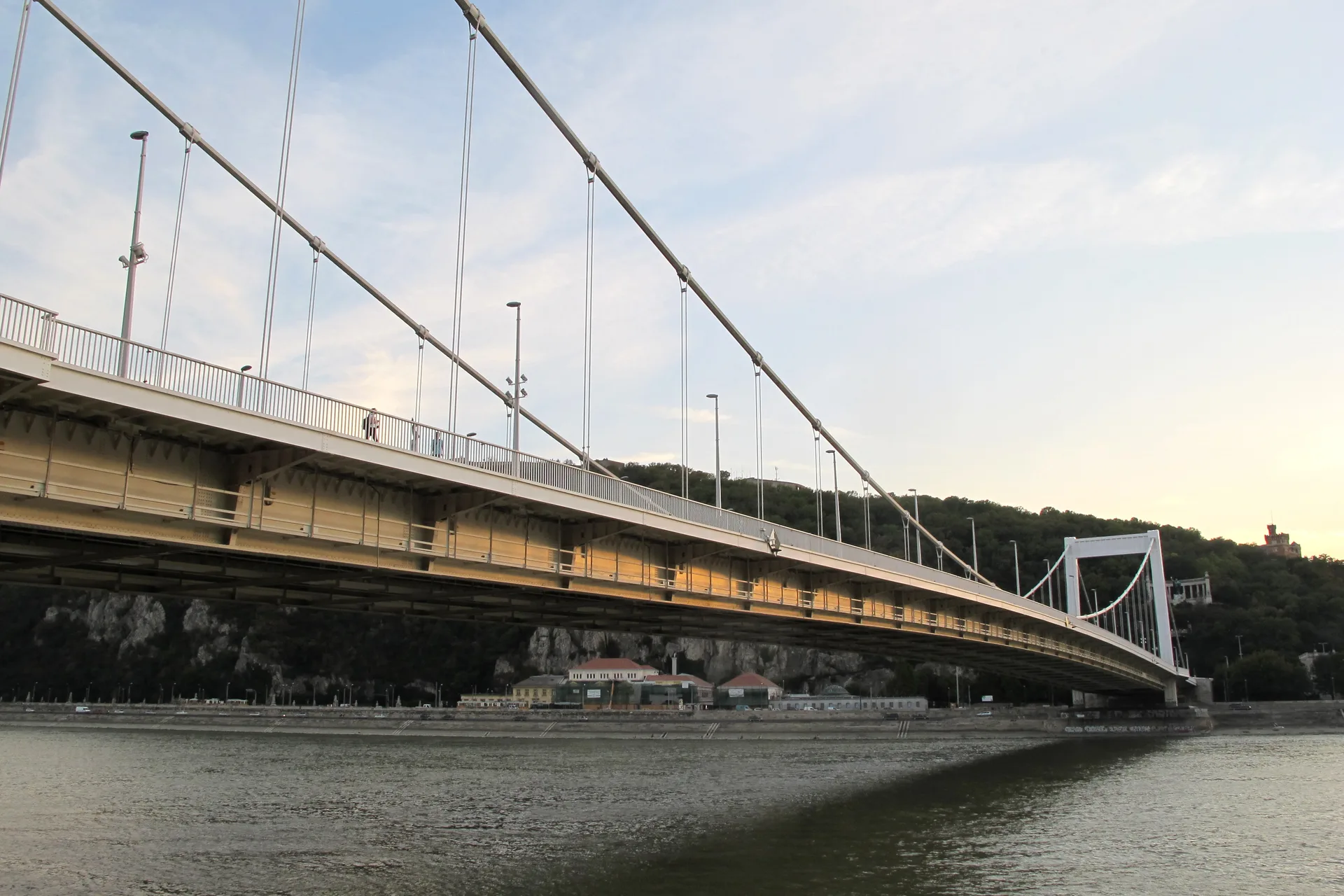
A sleek white cable-stayed bridge crossing the Danube at its narrowest Budapest point — a mid-century rebuild of an ornate original destroyed in WWII, named for the beloved Empress 'Sisi.'