
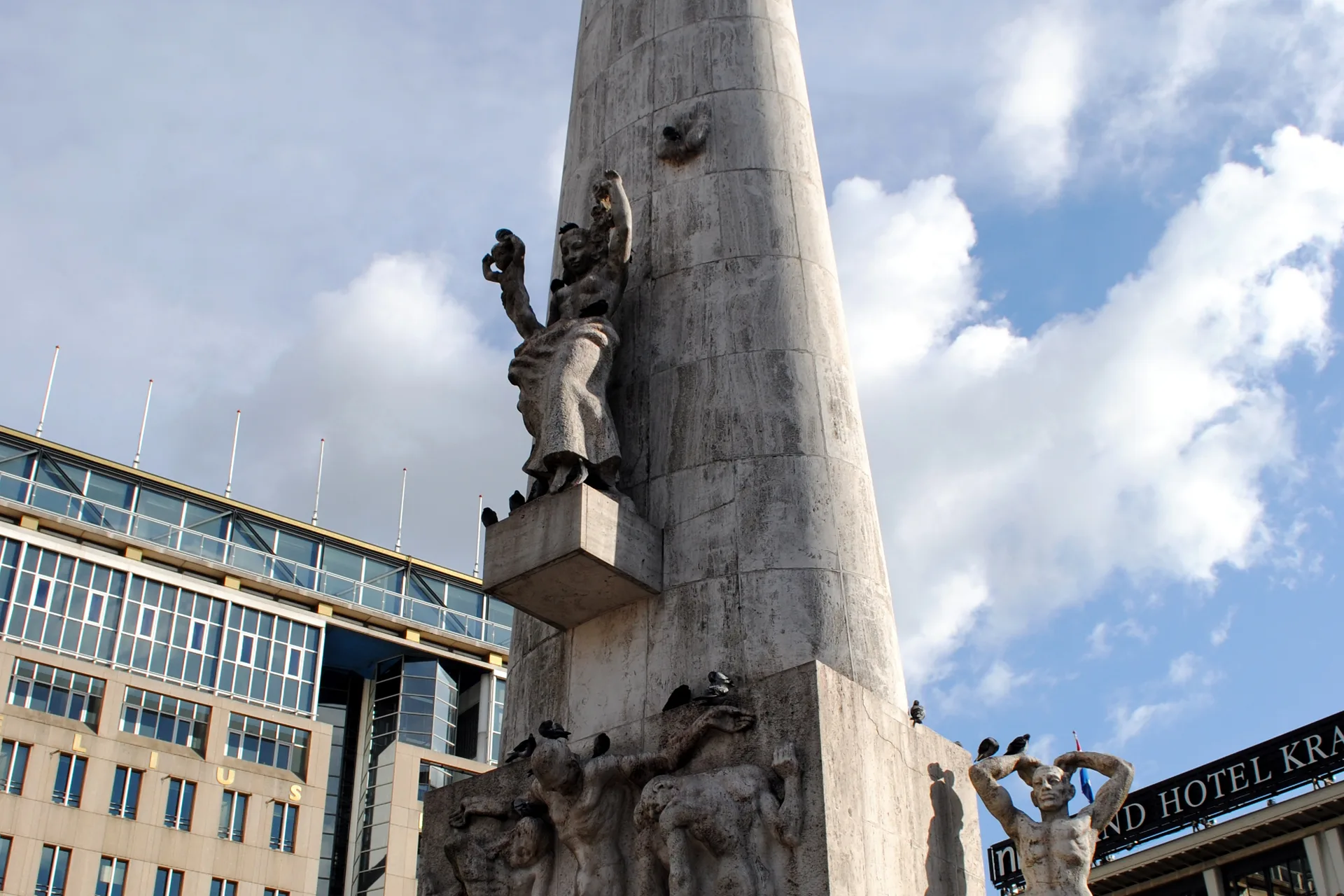
Best for
Every visitor — the natural hub of the historic centre
Time needed
15–30 minutes
Worth it?
Yes — free and unavoidable as the city's central square
Skip if
Never really — you'll likely pass through regardless
About Dam Square & National Monument
Dam Square takes its name, and the city's, from the dam built across the river Amstel here in the 13th century to hold back the Zuiderzee — the literal founding point of Amsterdam. Roughly 200 metres long and 100 metres wide, it has functioned as the city's civic and commercial centre for the better part of eight centuries, framed today by the Royal Palace, the Nieuwe Kerk and De Bijenkorf department store.
At its centre stands the National Monument, a 22-metre stone obelisk unveiled in 1956 by Queen Juliana as the Netherlands' principal memorial to those who died in WWII and later conflicts. Sculptor John Rädecker and architect Jacobus Oud designed it together; every year on 4 May it's the site of the national Remembrance of the Dead ceremony, drawing crowds and dignitaries in a solemn contrast to the square's usual bustle.
Read the full storyShow less
The square has repeatedly served as a stage for public gathering and protest well beyond its ceremonial role — most famously as a hippie 'Dam sleeping' gathering point in the late 1960s and early 1970s that ended in rioting when the municipal government banned the practice in 1970, requiring off-duty marines to clear the square.
As the geographic and symbolic centre of the city, Dam Square is somewhere nearly every Amsterdam visitor passes through repeatedly rather than visiting once — worth pausing at deliberately rather than only cutting across on the way somewhere else.
What to See: Highlights
- 1The literal founding site of Amsterdam, dammed in the 13th century
- 2The National Monument, the Netherlands' principal WWII memorial, unveiled 1956
- 3Framed by the Royal Palace, Nieuwe Kerk and De Bijenkorf
- 4Site of the annual national Remembrance of the Dead ceremony on 4 May
- 5A historic site of public gathering and protest, from hippie sit-ins to modern demonstrations
Skip the Queue — Book Tickets Online
Same admission, instant confirmation. Compare prices across platforms.
Affiliate disclosure — we may earn a commission at no extra cost to you.
Insider Tips
Visit on 4 May if you want to witness the national Remembrance ceremony (expect large crowds)
It's a genuine transit hub — trams from across the city converge here
Watch belongings closely — it's one of the busiest, most pickpocket-prone spots in the city
Combine with the Royal Palace and Nieuwe Kerk, both right on the square
Street performers and occasional markets or events regularly activate the square
Book a Guided Tour
Get the most from your visit with a local expert guide.
Affiliate disclosure — we may earn a commission at no extra cost to you.
Getting There
Dam, 1012 Amsterdam
Open in Google Maps →- 1Trams 2, 4, 11, 12, 13, 14, 17 or 24 to Dam. 10-minute walk from Amsterdam Centraal.
Where to stay
Hotels in Amsterdam
Compare prices across hundreds of hotels near this attraction — from budget hostels to luxury stays. Free cancellation on most rooms.
Affiliate disclosure — we may earn a commission at no extra cost to you. Powered by Booking.com.
Frequently Asked Questions
Everything you need to know before you visit.
Is Dam Square & National Monument worth visiting?+−
How long does a visit to Dam Square & National Monument take?+−
Who is Dam Square & National Monument best for?+−
Do I need to book anything in advance to visit Dam Square & National Monument?+−
Is Dam Square & National Monument included with the Amsterdam city pass?+−
Should You Visit?
Visit if...
- You want to see the literal founding site of Amsterdam
- You're visiting the Royal Palace or Nieuwe Kerk, both on the square
- You're interested in the National Monument and its WWII memorial role
- You're passing through on the way to the Damrak or Rokin
Skip if...
- You're deliberately avoiding busy tourist hubs — this is one of the busiest
Ready to Book Your Visit?
More to See in Amsterdam
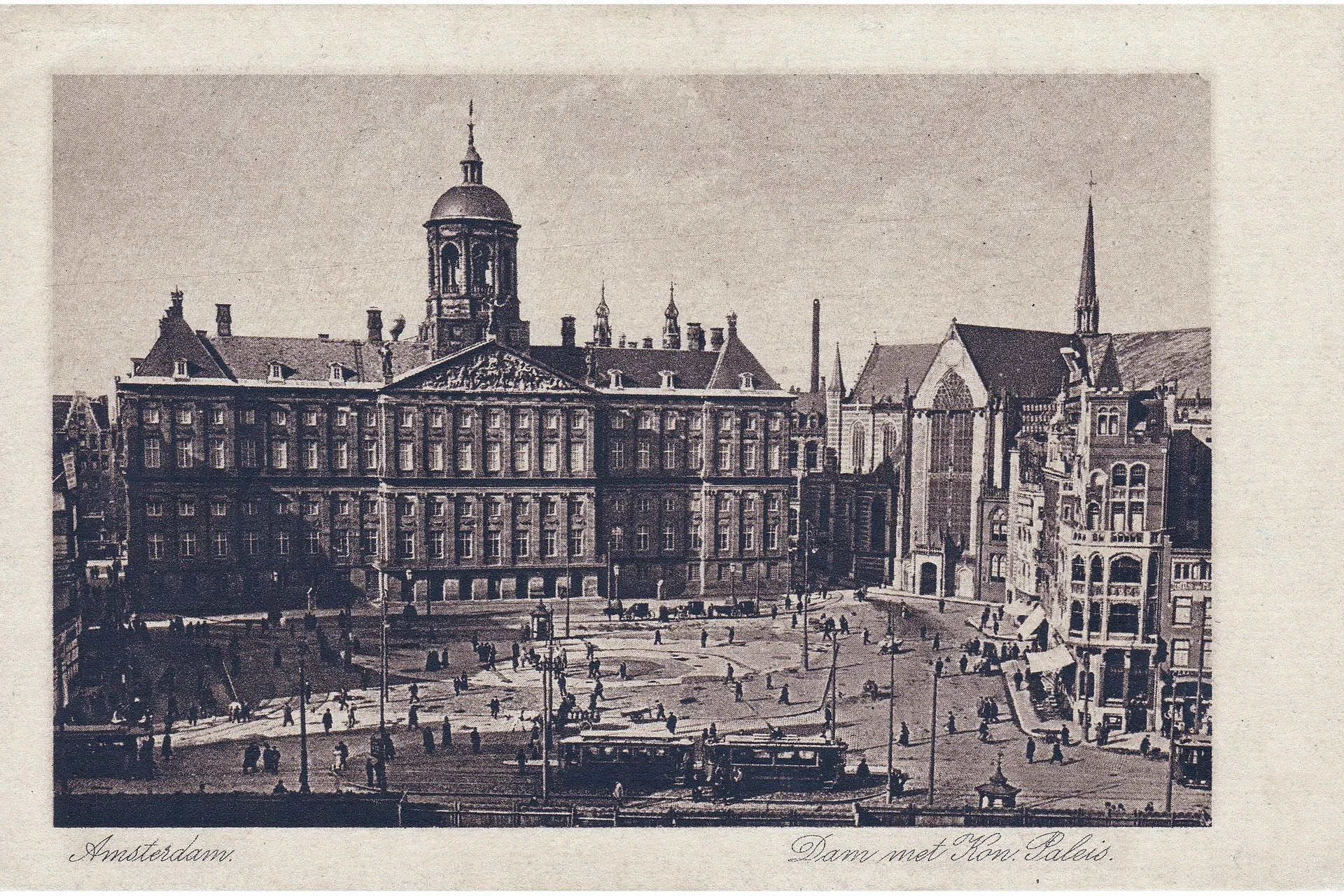
Royal Palace Amsterdam
A 17th-century former city hall, built at the height of Amsterdam's Golden Age wealth and still used today by the Dutch royal family for state functions.
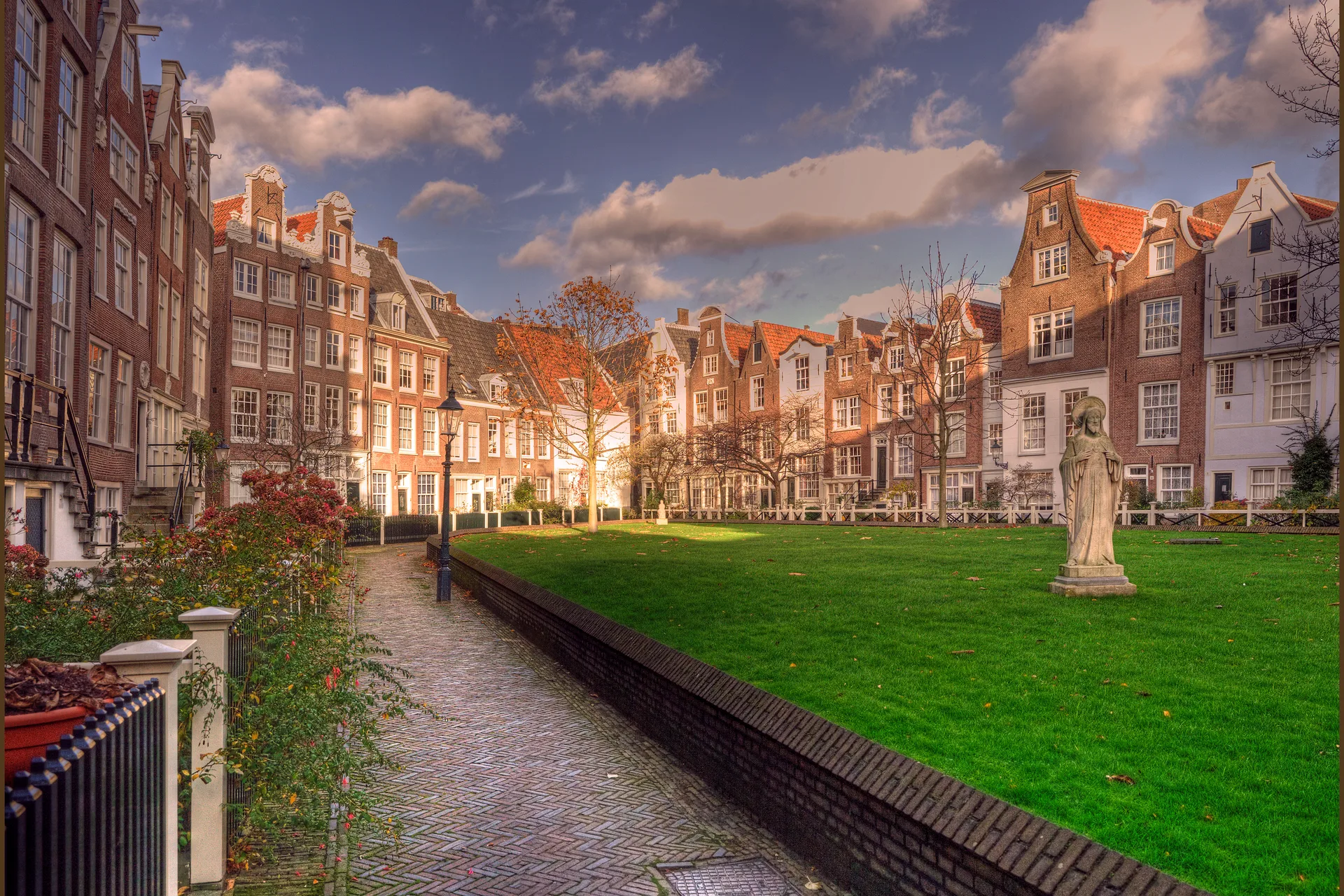
Begijnhof
A silent, hidden courtyard of medieval and 17th-century houses in the middle of the city centre, home for centuries to the Begijnen — unmarried laywomen devoted to a semi-religious life.
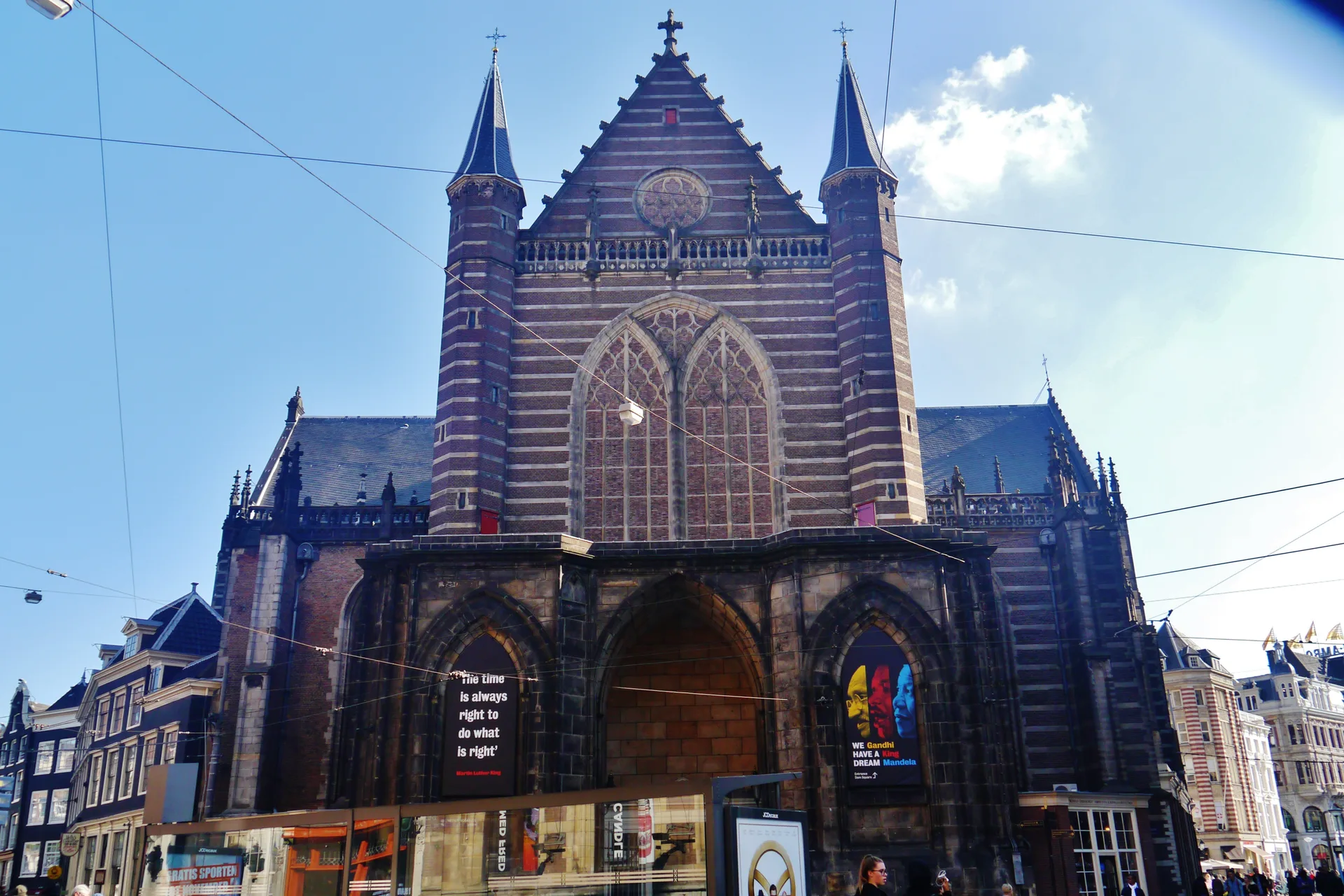
Nieuwe Kerk
A 15th-century Gothic church on Dam Square where Dutch monarchs are inaugurated — no longer used for regular worship, now a major exhibition space for art and history shows.