
Best for
Every visitor to Rome — essential and free
Time needed
15–30 minutes (longer at a quiet hour for photos)
Worth it?
Yes — unconditionally
Skip if
Never skip it — just time your visit to avoid the worst crowds
About Trevi Fountain
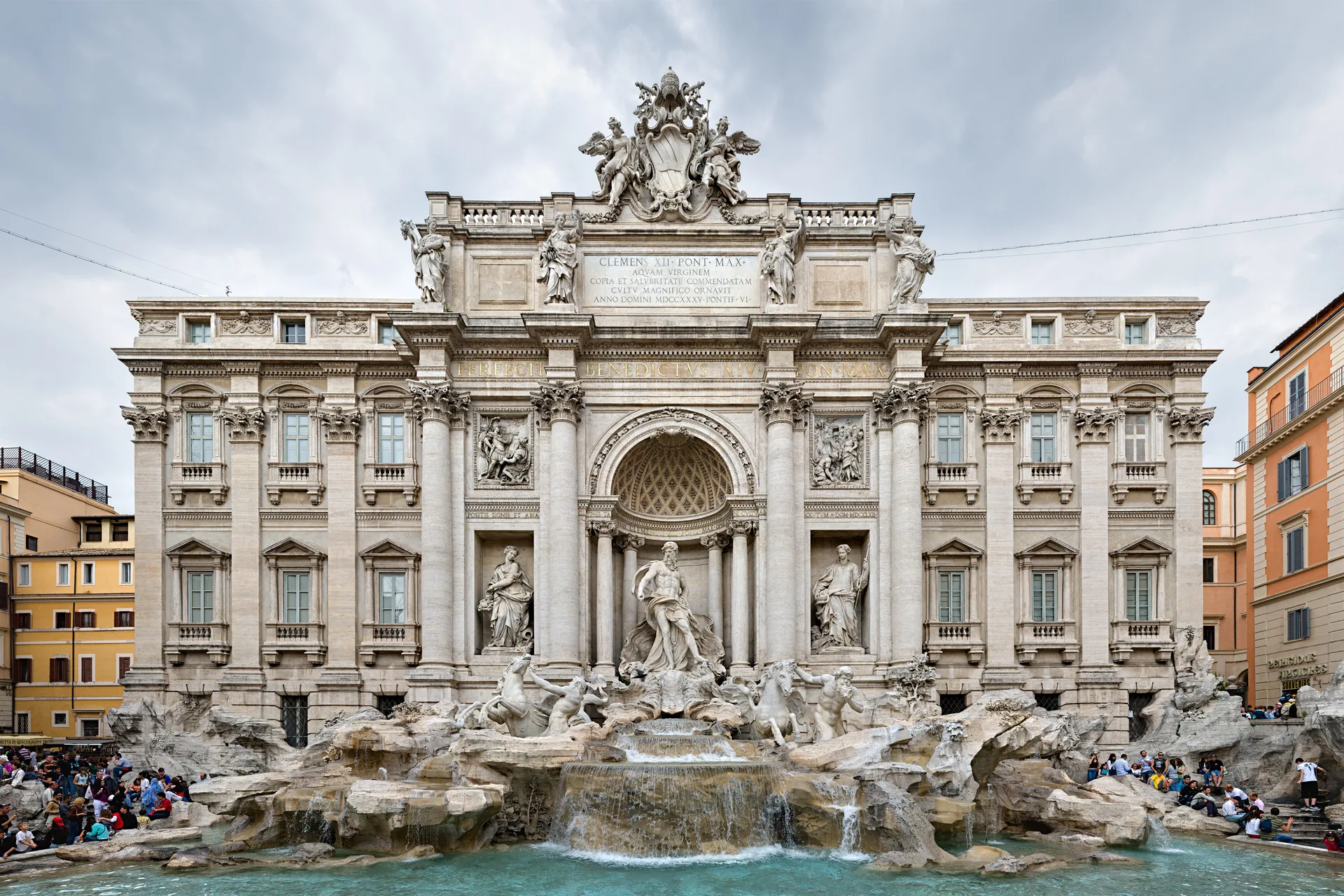
The Trevi Fountain marks the endpoint of the Aqua Virgo, an aqueduct built in 19 BC by Marcus Agrippa that still, remarkably, supplies the water flowing through the fountain today — one of ancient Rome's engineering feats still functionally at work two thousand years later. The fountain itself is far younger than its water source: Nicola Salvi won the design competition in 1732, and the fountain wasn't completed until 1762, three decades and one architect's death (Salvi's, from illness attributed to the damp working conditions) after construction began.
The design turns the entire back wall of Palazzo Poli into a stage set: Oceanus, god of all water, rides a shell chariot pulled by two sea-horses — one calm, one agitated, representing the sea's alternating moods — flanked by Abundance and Salubrity, while the whole scene erupts from carved travertine rockwork as though the palace facade itself were a natural cliff face. At nearly 26 metres high and 49 metres wide, it's the largest Baroque fountain in Rome by a considerable margin.
Read the full storyShow less
The coin-throwing tradition — toss a coin with your right hand over your left shoulder, back to the fountain, to guarantee a return to Rome — was popularized globally by mid-20th-century films, especially Three Coins in the Fountain (1954) and La Dolce Vita (1960), the latter also responsible for the fountain's other famous association: Anita Ekberg wading into the water at night, a scene tourists still occasionally and inadvisably try to recreate (wading in the fountain is illegal and fined). An estimated €3,000 in coins is collected from the fountain daily and donated to Caritas, an Italian Catholic charity, to fund a supermarket for Rome's poor.
A 2024 change introduced a small charge (around €2) for the closest viewing perimeter directly at the fountain's edge, where the coin-toss photos happen — viewing from the surrounding piazza itself remains completely free, and the vast majority of visitors won't notice any practical difference.
What to See: Highlights
- 1Oceanus's shell chariot and the two contrasting sea-horses
- 2The largest Baroque fountain in Rome, fed by a functioning 2,000-year-old aqueduct
- 3The traditional coin-toss for a guaranteed return to Rome
- 4Illuminated at night for dramatic photos
- 5Fountain coins collected daily and donated to a Rome charity for the poor
Skip the Queue — Book Tickets Online
Same admission, instant confirmation. Compare prices across platforms.
Affiliate disclosure — we may earn a commission at no extra cost to you.
Insider Tips
Visit before 8am or after 11pm for a genuinely people-free photo — midday is relentlessly crowded
Throw your coin with the right hand over the left shoulder for the traditional 'return to Rome' wish
Wading into the fountain is illegal and enforced with fines — admire, don't enter
The closest perimeter now costs a small fee; the piazza view remains free
Combine with a short walk to the Pantheon or Spanish Steps, both under 15 minutes away
Book a Guided Tour
Get the most from your visit with a local expert guide.
Affiliate disclosure — we may earn a commission at no extra cost to you.
Getting There
Piazza di Trevi, 00187 Roma RM
Open in Google Maps →- 1A 10-minute walk from the Spanish Steps or Pantheon. Bus routes 62, 63, 71, 85, 160 stop nearby along Via del Tritone.
Where to stay
Hotels in Rome
Compare prices across hundreds of hotels near this attraction — from budget hostels to luxury stays. Free cancellation on most rooms.
Affiliate disclosure — we may earn a commission at no extra cost to you. Powered by Booking.com.
Frequently Asked Questions
Everything you need to know before you visit.
Is Trevi Fountain worth visiting?+−
How long does a visit to Trevi Fountain take?+−
Who is Trevi Fountain best for?+−
Do I need to book anything in advance to visit Trevi Fountain?+−
Is Trevi Fountain included with the Rome city pass?+−
Should You Visit?
Visit if...
- You want the classic Trevi coin-toss photo
- You're willing to visit early morning or late evening for a quieter experience
- You appreciate large-scale Baroque theatricality
- You're near the historic centre with even 20 minutes free
Skip if...
- It's midday in peak summer and you can't tolerate the density of the crowd — return later instead of skipping entirely
Ready to Book Your Visit?
More to See in Rome
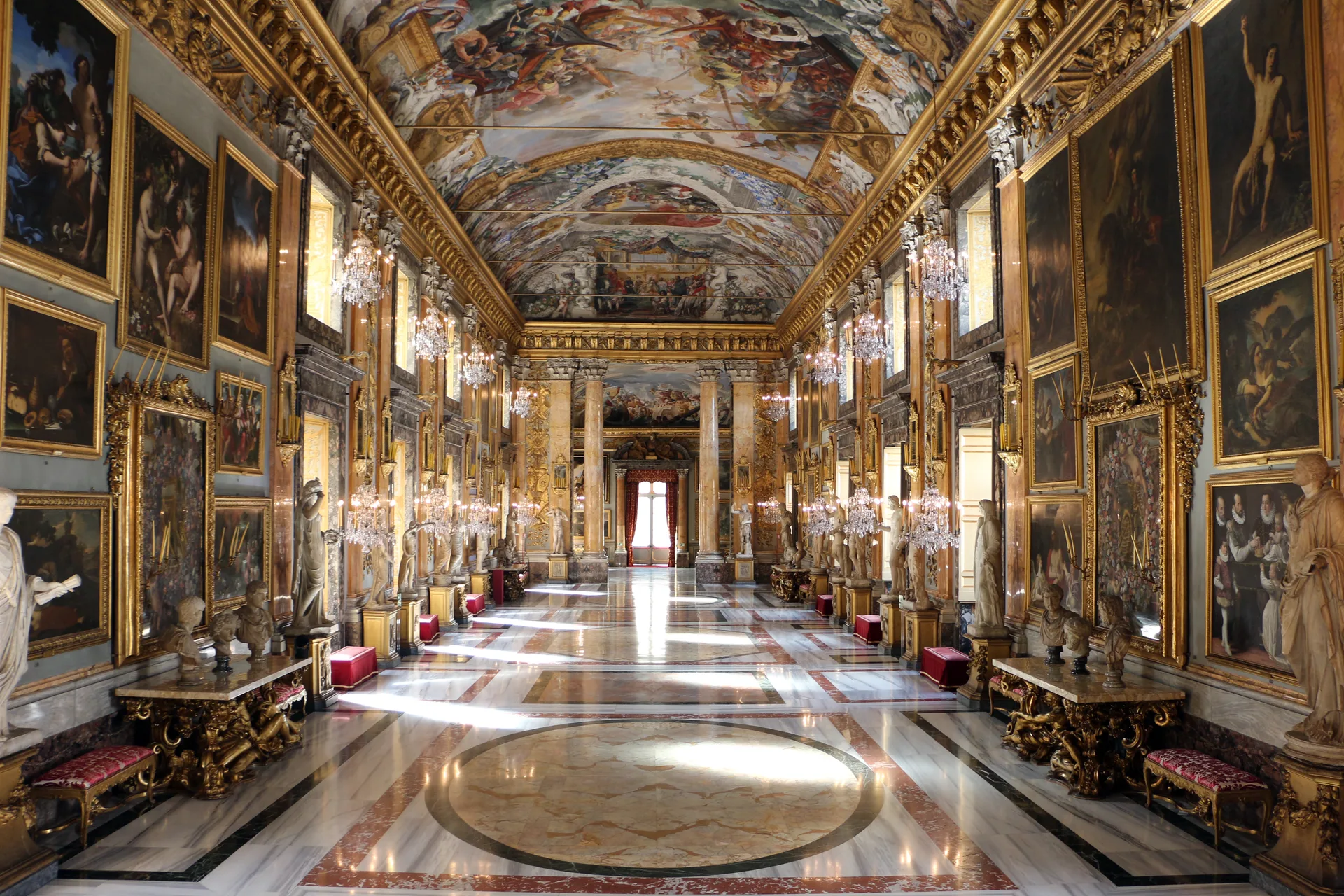
Galleria Colonna
One of Rome's grandest private palace galleries, open to the public only two mornings a week — a Baroque great hall so lavish it appeared in the closing scene of Roman Holiday.
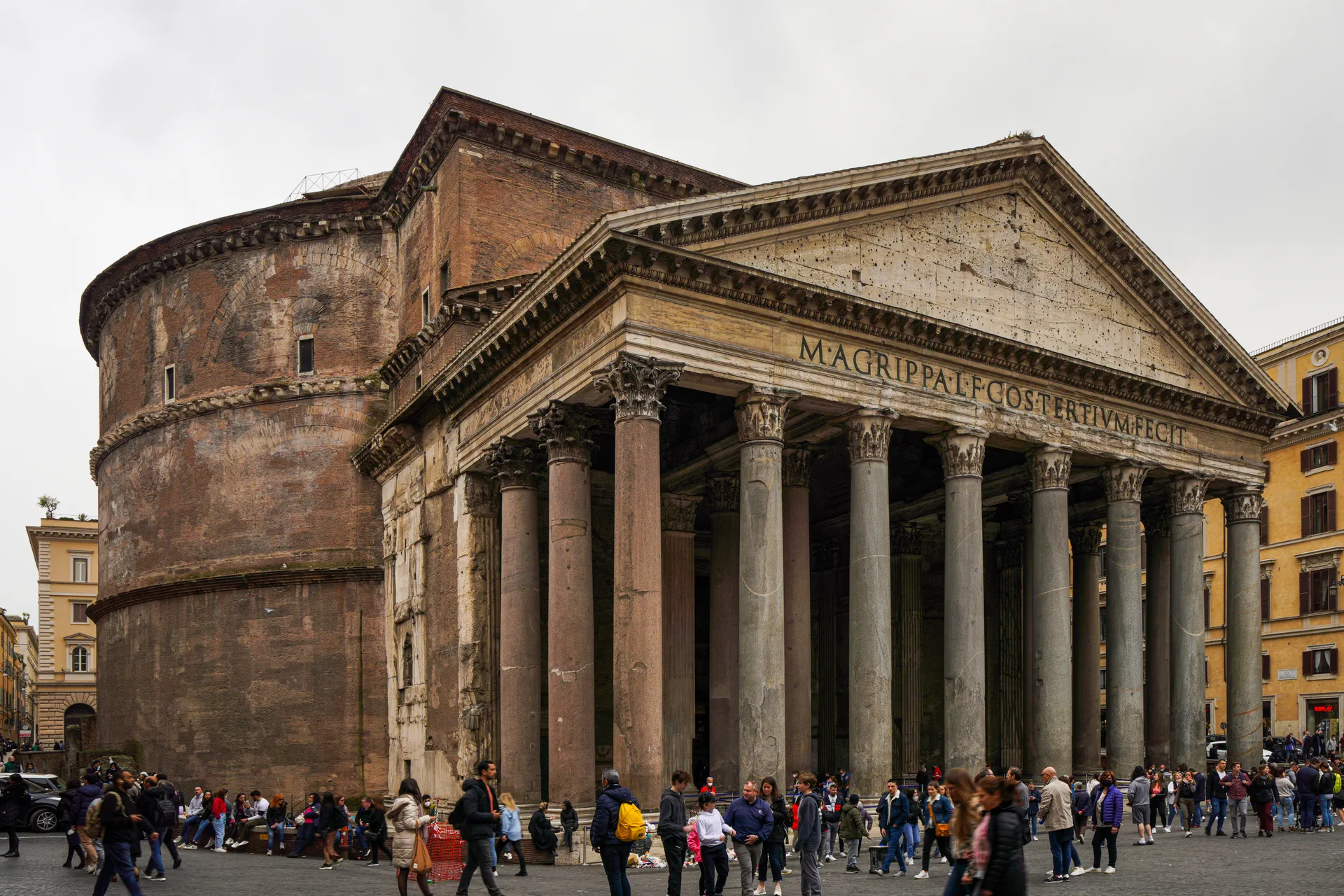
Pantheon
The best-preserved building from ancient Rome and still, nineteen centuries on, the world's largest unreinforced concrete dome — free to marvel at from outside, a small fee to step inside since 2023.
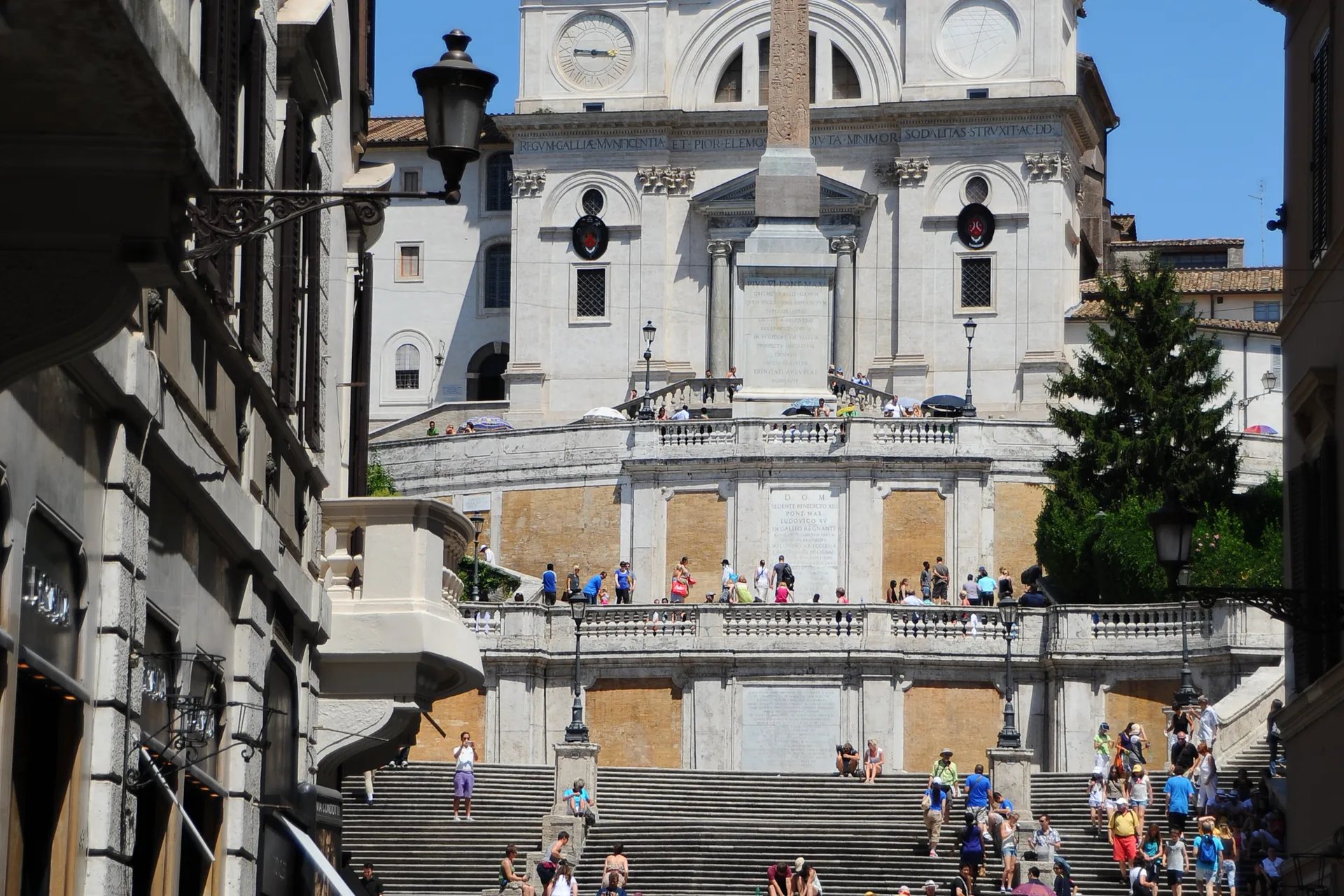
Spanish Steps
Europe's longest and widest outdoor staircase, connecting a French-funded piazza to a French church, named for a Spanish embassy — 135 steps of pure 18th-century Roman theatre.