
Best for
Every visitor, especially at dusk for photos
Time needed
10–20 minutes
Worth it?
Yes — free, iconic and easy to combine with other sights
Skip if
Never really — it's a quick, free stop on the way to other places
About Magere Brug (Skinny Bridge)
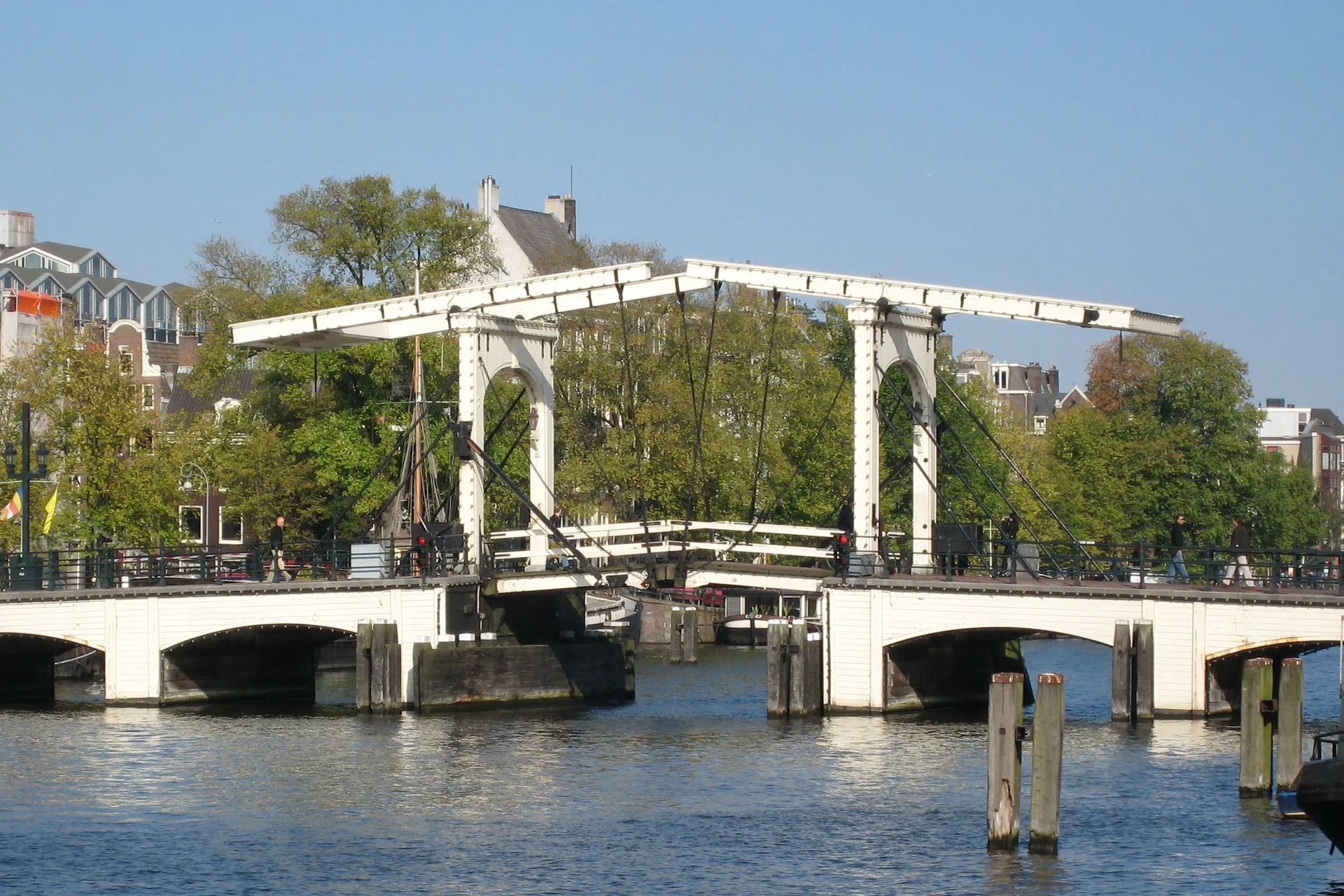
The Magere Brug's history stretches back to 1691, when the first bridge on this site was built to connect the two banks of the Amstel where the river runs between Keizersgracht and Prinsengracht. According to local tradition, the name — 'Skinny Bridge' — comes either from two sisters surnamed Mager who lived on opposite banks and had the narrow footbridge built to visit each other more easily, or simply from how genuinely narrow the original crossing was for pedestrians trying to pass in both directions.
Whatever the true origin, the bridge was repeatedly rebuilt as Amstel river traffic grew: a wider version replaced the original in 1871, and the structure standing today dates to 1934, a double-leaf wooden drawbridge built in the traditional Dutch style with low arches that still opens by hand-operated winch for boat traffic passing beneath.
Read the full storyShow less
Since 2003 it has been closed to cars, open only to pedestrians and cyclists, and its defining feature after dark is a string of roughly 1,200 light bulbs outlining its arches and railings — switched on at dusk, turning it into one of the most reliably photographed spots on the Amstel and a fixture of nearly every Amsterdam evening postcard.
As a registered municipal monument, it's protected from redevelopment, and its location — a short walk from Rembrandtplein and Waterlooplein — makes it an easy stop to combine with an evening canal walk or the tail end of a canal cruise route.
What to See: Highlights
- 1A traditional Dutch wooden double-leaf drawbridge, rebuilt in 1934
- 2Roughly 1,200 lights illuminating the bridge after dusk
- 3Closed to cars since 2003 — pedestrians and cyclists only
- 4A protected municipal monument
- 5One of the most-photographed spots along the Amstel
Skip the Queue — Book Tickets Online
Same admission, instant confirmation. Compare prices across platforms.
Affiliate disclosure — we may earn a commission at no extra cost to you.
Insider Tips
Visit at dusk when the 1,200 lights switch on for the best photos
It's a short walk from Rembrandtplein and Waterlooplein — easy to combine
Most canal cruise routes pass directly under or beside it
Free and open 24 hours — no need to plan around opening times
Watch for the drawbridge opening if a boat needs to pass — a nice, if unpredictable, bonus to see
Book a Guided Tour
Get the most from your visit with a local expert guide.
Affiliate disclosure — we may earn a commission at no extra cost to you.
Getting There
Magere Brug, 1018 EK Amsterdam (crossing the Amstel between Kerkstraat and Nieuwe Kerkstraat)
Open in Google Maps →- 1Tram 4 to Prinsengracht/Utrechtsestraat, or a short walk from Rembrandtplein or Waterlooplein.
Where to stay
Hotels in Amsterdam
Compare prices across hundreds of hotels near this attraction — from budget hostels to luxury stays. Free cancellation on most rooms.
Affiliate disclosure — we may earn a commission at no extra cost to you. Powered by Booking.com.
Frequently Asked Questions
Everything you need to know before you visit.
Is Magere Brug (Skinny Bridge) worth visiting?+−
How long does a visit to Magere Brug (Skinny Bridge) take?+−
Who is Magere Brug (Skinny Bridge) best for?+−
Do I need to book anything in advance to visit Magere Brug (Skinny Bridge)?+−
Is Magere Brug (Skinny Bridge) included with the Amsterdam city pass?+−
Should You Visit?
Visit if...
- You want the classic lit-up Amsterdam bridge photo
- You're walking or cycling between Rembrandtplein and the Amstel
- You're on an evening canal cruise that passes this way
- You appreciate traditional Dutch drawbridge engineering
Skip if...
- You've already seen it from a canal cruise and don't need a dedicated stop
Ready to Book Your Visit?
More to See in Amsterdam

Amsterdam Canal Cruise
The classic way to see Amsterdam — a low glass-topped boat gliding through the UNESCO canal ring, passing centuries of gabled merchant houses from water level.

Waterlooplein Market
The Netherlands' oldest flea market, around 300 stalls of vintage clothing, antiques, records and curiosities on the square where Amsterdam's historic Jewish market once stood.